

Waffle weave microfiber golf towels outperform traditional cotton options by offering superior absorbency, rapid drying times, and enhanced durability. The unique grid pattern of waffle weave increases surface area, allowing the towel to trap and lift dirt and moisture more effectively than flat cotton terry. This makes them the preferred choice for modern golfers seeking a lightweight, high-performance accessory that maintains its shape and cleanliness over time. For additional details, review the Contact Towel Hub Wholesale.
The Physics of Waffle Weave Absorbency
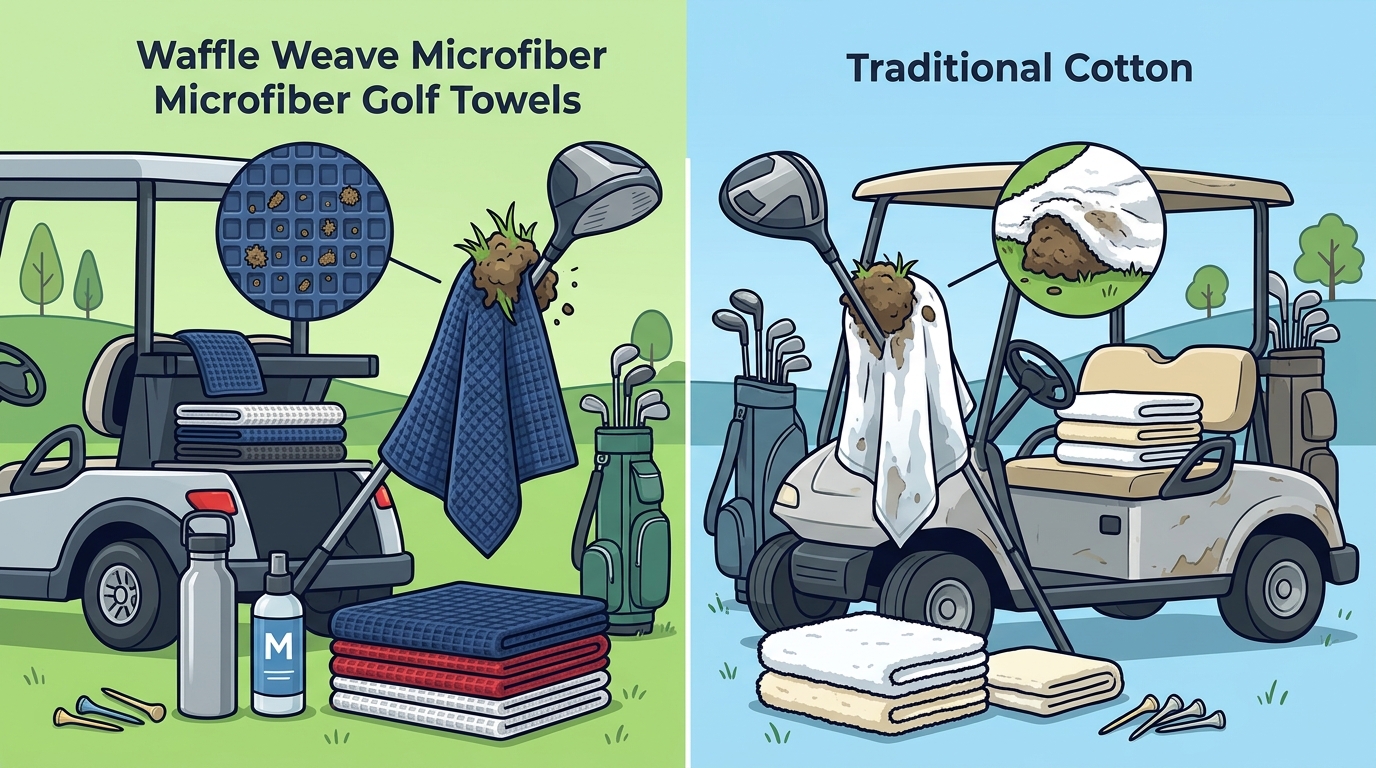
The primary advantage of waffle weave lies in its structural geometry. Waffle weave is a textile construction that creates a honeycomb-like pattern of small, raised squares. This design significantly increases the surface area of the fabric compared to a standard flat weave. When applied to microfiber, this structure creates thousands of tiny capillary channels that pull liquid into the fabric through capillary action.
Traditional cotton terry cloth relies on loops to absorb water. While effective, these loops can become matted over time, reducing absorbency. In contrast, the waffle grid remains open and distinct, ensuring consistent performance wash after wash. For a golfer, this means the towel can dry a club face or wipe sweat from the face in seconds, rather than minutes. The efficiency of this absorption is critical during a round of golf, where time and dryness directly impact performance.
Microfiber vs. Cotton: Material Composition
Microfiber is a synthetic fiber, typically made from polyester and polyamide, that is split into strands much finer than a human hair. This fineness allows microfiber to attract and hold onto dust, dirt, and moisture at a molecular level. Cotton, a natural fiber, absorbs water into the core of the fiber. While cotton feels soft, it lacks the electrostatic charge that helps microfiber lift debris.
When comparing the two for golf, the material difference is evident in how they handle dirt. Cotton towels often trap dirt within the loops, requiring aggressive washing to remove it. Microfiber waffle towels, however, tend to release dirt more easily during the rinse cycle. This self-cleaning aspect is a significant benefit for golfers who use their towels in dusty or sandy environments. The result is a towel that stays cleaner and fresher for longer periods of use.
Drying Speed and Weight Considerations
One of the most practical benefits of waffle weave microfiber is its rapid drying capability. Because the fibers are synthetic and the weave is open, the towel releases moisture quickly when hung up. Cotton towels, particularly those with high GSM For additional details, see grams per square meter., can remain damp for hours. This dampness can lead to mildew odors if the towel is not dried completely before being stored in a bag.
Weight is another critical factor. A standard cotton golf towel can weigh significantly more than a microfiber equivalent. For golfers who carry their own bags, every ounce counts. A waffle weave microfiber towel is lightweight yet durable, reducing the overall load on the golfer. This weight reduction contributes to less fatigue over an 18-hole round. The combination of light weight and fast drying makes microfiber a superior choice for travel and daily use.
Durability and Long-Term Value
Durability is a key consideration when investing in a golf accessory. Microfiber is known for its resistance to pilling and fraying. The synthetic nature of the fiber makes it stronger than cotton, which can weaken at the seams and loops over time. A high-quality waffle weave microfiber towel can last for years with proper care, maintaining its structural integrity and absorbency.
Cotton towels, while biodegradable, tend to degrade faster under the stress of frequent use and washing. The loops in terry cloth can unravel, and the fabric can thin out, reducing its effectiveness. From a cost-per-use perspective, a durable microfiber towel often provides better long-term value. Golfers who use their towels daily will notice the difference in longevity. The investment in a high-quality synthetic towel pays off through extended service life and consistent performance.
Care and Maintenance Differences
Maintaining a waffle weave microfiber towel is straightforward but requires specific attention. Microfiber should be washed without fabric softeners, as these products coat the fibers and reduce their absorbency. Cotton towels, on the other hand, can benefit from fabric softeners, which keep the natural fibers soft. This difference in care is a common point of confusion for new microfiber users. Following the correct washing instructions is essential to preserve the towel's performance.
Additionally, microfiber towels should be dried on low heat or air-dried to prevent damage to the synthetic fibers. Cotton towels can typically handle higher heat settings. By adhering to these care guidelines, golfers can ensure their towels remain effective for many seasons. Proper maintenance extends the life of the towel and ensures it continues to perform at a high level. This ease of care, combined with performance benefits, makes waffle weave microfiber a smart choice for any golfer.
Key Takeaways
- Waffle weave increases surface area, enhancing absorbency and dirt-lifting capabilities.
- Microfiber dries significantly faster than cotton, reducing the risk of mildew and odor.
- Synthetic microfiber is lighter than cotton, reducing the overall weight of a golf bag.
- Microfiber towels are more durable and resistant to pilling than traditional cotton terry.
- Proper care, such as avoiding fabric softeners, is crucial for maintaining microfiber performance.
- The open grid structure of waffle weave prevents matting, ensuring consistent performance over time.
Frequently Asked Questions
Is waffle weave microfiber better than cotton for golf?
Yes, waffle weave microfiber is generally better for golf due to its superior absorbency, faster drying time, and lighter weight. The grid pattern allows for efficient moisture removal, which is critical for maintaining dry hands and clean clubs during a round.
How should I wash a microfiber golf towel?
Wash microfiber towels in warm water without fabric softeners or bleach. Use a mild detergent and dry on low heat or air-dry. Avoid high heat, which can damage the synthetic fibers and reduce their effectiveness.
Does waffle weave microfiber hold up to frequent washing?
Yes, high-quality microfiber is designed to withstand frequent washing. The synthetic fibers are strong and resistant to pilling, ensuring the towel maintains its structure and absorbency over many wash cycles.
Can I use a microfiber towel for other purposes?
While microfiber is versatile, it is best to dedicate a specific towel to golf to avoid cross-contamination. Using a golf towel for cleaning windows or cars can introduce chemicals that may affect its performance on the course.
What is the lifespan of a waffle weave microfiber towel?
With proper care, a waffle weave microfiber towel can last for several years. The durability of the synthetic fibers and the robustness of the weave contribute to a long service life, making it a cost-effective investment.
Is cotton a better choice for eco-friendliness?
Cotton is biodegradable and a natural fiber, which may appeal to eco-conscious consumers. However, microfiber is durable and long-lasting, which can offset its environmental impact through reduced replacement frequency. Both have their pros and cons depending on priority.
Conclusion
Waffle weave microfiber golf towels offer a distinct advantage over traditional cotton options in terms of performance, durability, and convenience. The combination of superior absorbency, rapid drying, and lightweight construction makes them an ideal choice for modern golfers. By understanding the material differences and following proper care instructions, you can maximize the lifespan and effectiveness of your towel. For those looking to upgrade their golf accessories, exploring the wholesale golf towels available at Towel Hub is a great starting point. Our team at Towel Hub is dedicated to providing high-quality textile solutions that meet the specific needs of commercial and individual buyers alike.