
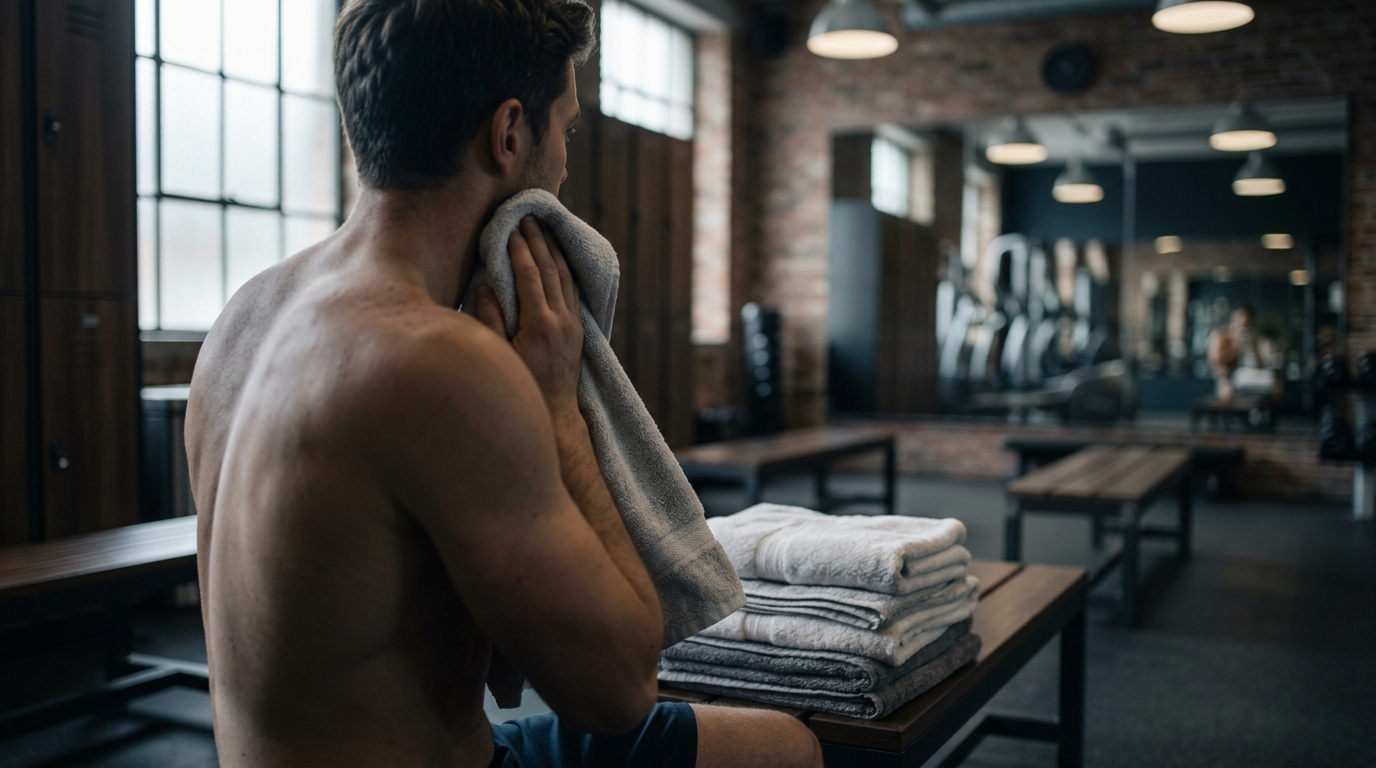
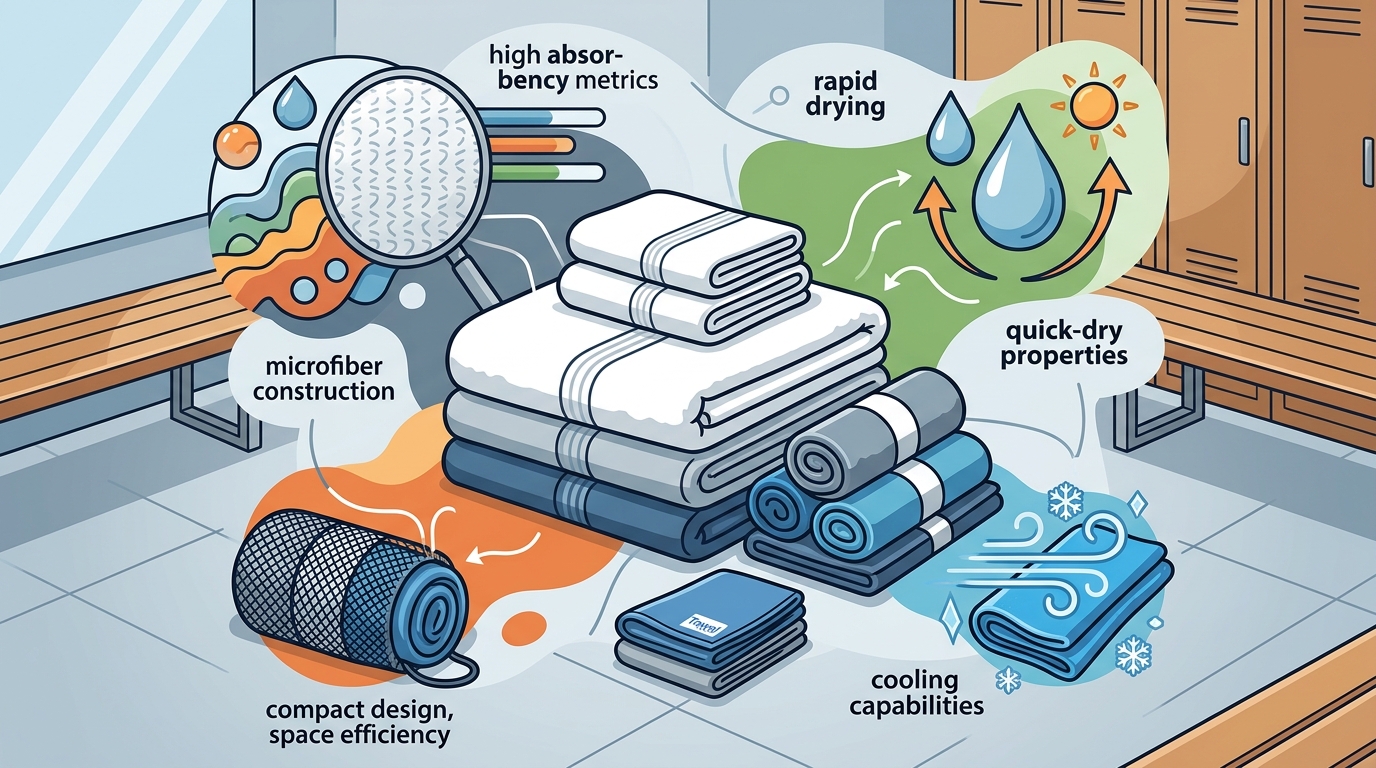
Choosing the best towels for a gym setting requires balancing high absorbency, rapid drying, and durability against heavy commercial use. Towel Hub provides institutional-grade athletic towels engineered specifically for locker rooms, fitness centers, and training facilities. This guide covers the five critical performance factors that define top-tier gym towels: microfiber construction, quick-dry properties, absorbency metrics, compact design, and cooling capabilities.
Microfiber Towels
Microfiber is a synthetic fabric made from split polyester and polyamide fibers that are finer than a human hair. In a gym environment, microfiber is the dominant material for athletic towels because it wicks moisture away from the skin faster than traditional cotton. The split fiber structure creates a massive surface area that traps water and sweat efficiently. This makes microfiber ideal for high-traffic locker rooms where towels must be washed and reused frequently.
Why Microfiber Outperforms Cotton in Gyms
Cotton absorbs water by swelling, which can make towels feel heavy and slow to dry. Microfiber, by contrast, relies on capillary action to pull liquid into the fabric. This means a microfiber gym towel can absorb several times its weight in water without becoming saturated. For facility managers, this translates to faster turnover times in laundry and less downtime for members. Towel Hub offers a wide range of wholesale gym towels that include both cotton and synthetic options to suit different operational needs.
Durability and Washing Considerations
Microfiber towels are highly durable and can withstand hundreds of industrial wash cycles. However, they require specific care to maintain their wicking properties. Using fabric softeners can coat the fibers and reduce absorbency over time. Towel Hub provides detailed washing instructions to help facility staff maintain the performance of their textile inventory. Proper laundering ensures that the microfiber continues to perform at peak efficiency throughout its lifecycle.
Quick Dry Properties
The Role of Fabric Weight in Drying Time
The weight of a towel, often measured in GSM (Grams Per Square Meter), directly impacts its drying speed. Lighter towels dry faster but may lack the plush feel some members prefer. Heavier towels absorb more but take longer to dry. Towel Hub helps buyers determine the right balance by offering towels in various weights. Understanding how to determine towel thickness is essential for selecting the right product for your specific laundry capabilities and member preferences.
Impact on Laundry Operations
Quick-drying towels reduce the energy costs associated with commercial drying. If a towel dries quickly on its own, it requires less time in the dryer, saving on electricity and gas. This efficiency is a significant operational benefit for large fitness centers. By choosing towels with superior quick-dry properties, facility managers can optimize their laundry workflows and reduce overall operating expenses.
Absorbency
Absorbency is the measure of how much liquid a towel can hold relative to its own weight. High absorbency is the primary function of any gym towel, as members use them to wipe away sweat during and after workouts. A towel that does not absorb sweat effectively will feel damp and unhygienic, leading to customer dissatisfaction. The best gym towels combine high absorbency with fast release, allowing them to soak up sweat quickly and then dry rapidly.
Testing Absorbency in the Field
Facility managers can test towel absorbency using a simple water-drop test. Place a drop of water on the towel's surface and observe how quickly it is absorbed. A high-quality towel will pull the water into the fabric within seconds. This quick check helps verify that the towels meet performance standards before a large-scale purchase. Towel Hub encourages buyers to request a sample to test absorbency and feel the quality firsthand before committing to a bulk order.
Cotton vs. Synthetic Absorbency
Compact Design
Compact design refers to the size and portability of a towel, allowing members to carry it easily in a gym bag or locker. Most gym members prefer towels that are large enough to wipe down but small enough to be convenient. A standard 12x12 or 16x26 inch towel is a popular size for this purpose. Compact towels are also easier to store in lockers and less likely to be lost or stolen compared to larger bath towels.
Size and Shape Options
Gym towels come in various shapes, including square, rectangular, and tri-fold. Tri-fold towels are particularly popular in gyms because they can be hung on hooks or stored in pockets. They are also easy to fold and carry. Towel Hub offers a variety of rally towels and athletic towels in compact sizes that are perfect for gym use. The right size ensures that members have a functional tool for wiping sweat without the bulk of a full bath towel.
Storage and Organization
Compact towels make it easier to organize locker rooms and towel stations. They can be stacked neatly or hung on racks without taking up excessive space. This organization contributes to a cleaner, more professional look in the facility. By choosing towels with a compact design, you enhance the overall user experience and make it easier for staff to manage inventory and restocking.
Cooling Towels
Cooling towels are designed to provide a temporary cooling effect when applied to the skin. They are often used in high-intensity training environments where members need to lower their body temperature. These towels typically use evaporative cooling technology, where the fabric is soaked in water and then wrung out. As the water evaporates, it draws heat away from the skin, providing a refreshing sensation.
Applications in High-Intensity Training
Material Considerations for Cooling
The material of a cooling towel affects its effectiveness. Microfiber and certain synthetic blends are excellent for evaporative cooling because they hold water well and release it slowly. Cotton can also be used, but it may not provide as consistent a cooling effect. When selecting cooling towels, consider the specific needs of your members and the types of classes offered. Towel Hub can help you choose the right materials for your cooling towel needs.
Performance Comparison Table
| Feature | Microfiber | 100% Cotton | Blended |
|---|---|---|---|
| Absorbency | High (Wicking) | Very High (Swelling) | Medium-High |
| Drying Speed | Fast | Slow | Medium |
| Softness | Smooth | Plush | Soft |
| Durability | Excellent | Good | Good |
| Best For | High-Traffic Gyms | Premium Facilities | Budget-Conscious |
Key Takeaways
- Microfiber towels are the top choice for high-traffic gyms due to their fast wicking and quick-drying properties.
- Quick-dry towels reduce laundry costs and improve hygiene by preventing mold and mildew.
- High absorbency is essential for effective sweat management and member satisfaction.
- Compact designs enhance portability and make storage and organization easier in locker rooms.
- Cooling towels are beneficial for high-intensity training environments to help manage body temperature.
- The right towel weight (GSM) balances absorbency, feel, and drying time.
- Proper washing instructions are critical to maintaining the performance of synthetic towels.
- Requesting samples from a trusted supplier like Towel Hub helps verify quality before bulk purchasing.
Frequently Asked Questions
What is the best material for gym towels?
Microfiber is generally considered the best material for gym towels due to its superior wicking and quick-drying capabilities. However, 100% cotton is a popular choice for premium facilities that prioritize softness and plushness.
How often should gym towels be replaced?
Gym towels should be replaced when they show signs of wear, such as thinning fabric, fraying edges, or reduced absorbency. With proper care, high-quality towels can last for hundreds of wash cycles.
Can I use fabric softener on microfiber towels?
No, fabric softener should not be used on microfiber towels. It coats the fibers and reduces their ability to wick moisture, significantly impacting performance.
What size towel is best for a gym?
A 12x12 or 16x26 inch towel is ideal for most gym settings. These sizes are compact enough to carry but large enough to wipe down effectively.
How do I prevent gym towels from smelling bad?
Where can I buy wholesale gym towels?
Conclusion
Selecting the best towels for a gym setting involves a careful evaluation of material, size, and performance features. Microfiber towels offer the best balance of absorbency and quick-drying for high-traffic facilities, while cotton provides a premium feel for upscale gyms. By focusing on quick-dry properties, high absorbency, compact design, and cooling capabilities, you can enhance the member experience and optimize your laundry operations. Towel Hub is your trusted partner for sourcing high-quality, institutional-grade towels that meet the demanding needs of the fitness industry. Explore our athletic gym towels collection today to find the perfect solution for your facility.