
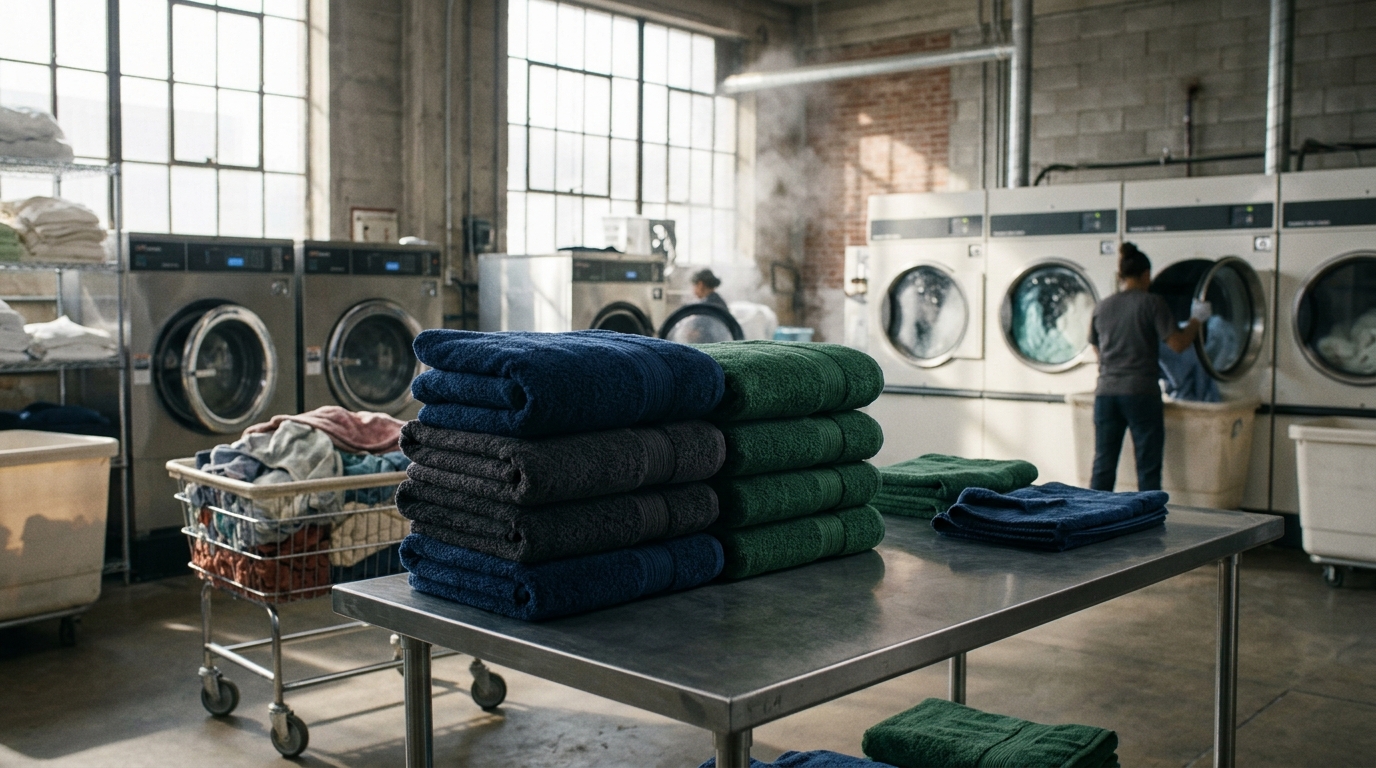
Regular colored towels fade and weaken when exposed to chlorine bleach, while bleach-resistant towels are engineered to retain color and structural integrity under harsh laundering. For commercial facilities, this difference determines whether your linen inventory lasts for months or years. Towel Hub provides specialized Bleach Shield® towels designed specifically for environments that require aggressive sanitization protocols.
The Chemistry of Color Fading
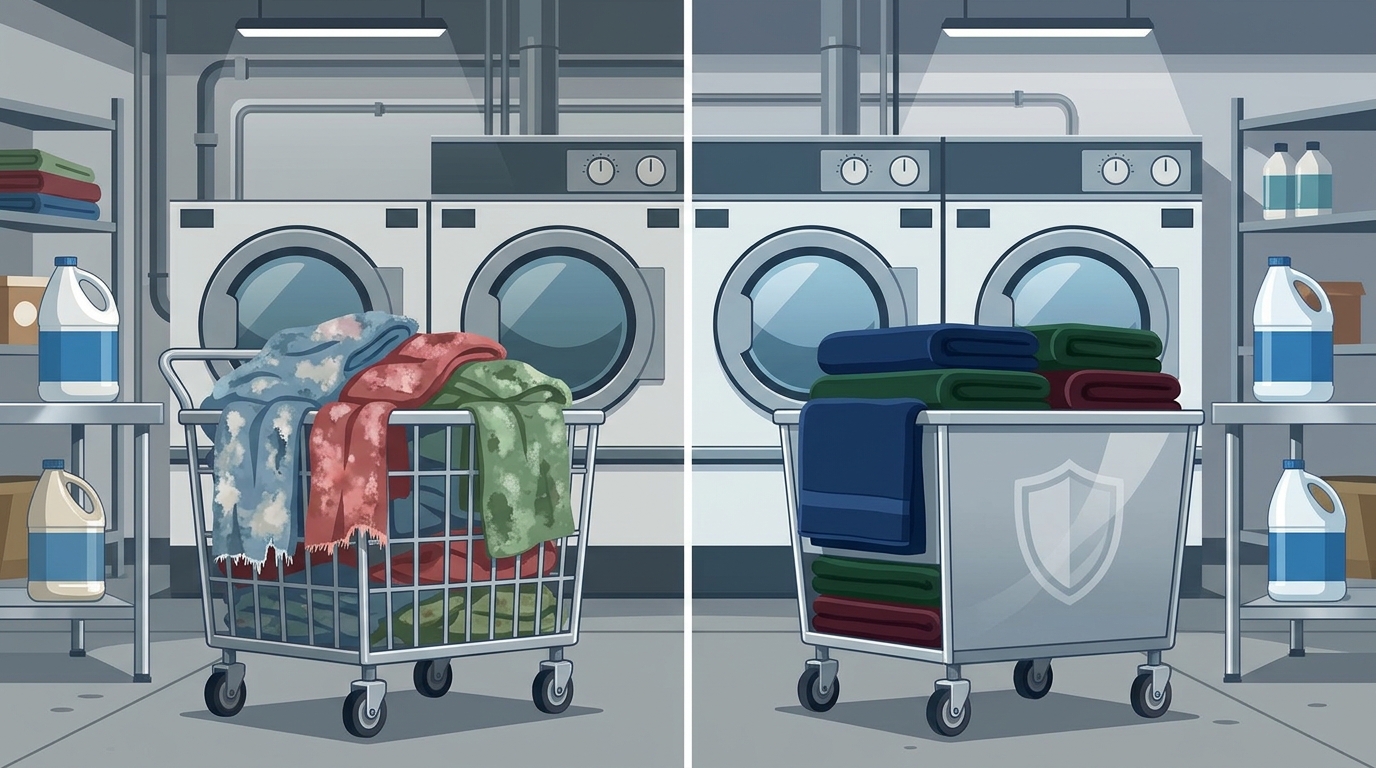
Standard dyed towels rely on conventional dyes that bond to cotton fibers but are susceptible to oxidation. When chlorine bleach contacts these fibers, it breaks the chemical bonds holding the dye in place. This process, known as oxidation, causes the color to leach out, resulting in a faded, grayish appearance. Over time, the fabric itself becomes brittle and prone to tearing. This degradation is not just cosmetic; it reduces the towel's absorbency and overall utility.
Bleach-resistant towels, such as the Bleach Shield® line, utilize specialized dyeing techniques and fiber treatments. These towels are designed to withstand repeated exposure to chlorine without significant color loss. The difference is visible after just a few wash cycles. While a standard red towel may turn pink or brown, a bleach-resistant red towel remains vibrant. This durability is critical for businesses that cannot afford to replace linens frequently.
Laundry Protocol Differences
Washing regular colored towels requires strict adherence to gentle care instructions. You must use cold water and avoid bleach entirely. Mixing colored towels with bleach-treated whites can cause cross-contamination and permanent staining. This limitation complicates laundry operations, as facilities must sort linens meticulously to prevent damage. The washing instructions for standard premium color towels explicitly state that no bleach should be used and that colors must be washed separately.
Impact on Operational Costs
The cost of replacing faded towels is a significant hidden expense for many businesses. Regular colored towels often need to be discarded after a few months of heavy use. This frequent replacement increases purchasing costs and disrupts operations. For a busy salon or gym, running out of clean towels can lead to service delays and customer dissatisfaction. Investing in higher-quality, bleach-resistant towels can reduce long-term costs by extending the lifespan of each towel.
Bleach-resistant towels typically have a higher upfront cost per unit. However, their extended lifespan means fewer replacements over time. For example, a standard towel might last 50 washes, while a bleach-resistant towel can last significantly longer under the same conditions. This longevity translates to lower total cost of ownership. Businesses can maintain a consistent inventory without the constant need for restocking. This stability is essential for maintaining high service standards and customer satisfaction.
Industry-Specific Applications
Different industries have different requirements for towel durability and hygiene. Salons and spas often use bleach to sanitize towels between clients. Regular colored towels are not suitable for this purpose, as they will fade quickly. The salon towels category includes bleach-resistant options that can handle this rigorous cleaning process. These towels maintain their professional appearance, which is important for client perception and brand image.
Gyms and athletic facilities also benefit from bleach-resistant towels. These environments require frequent sanitization to prevent the spread of germs. Regular towels may not withstand the combination of sweat, dirt, and bleach. Bleach-resistant towels provide the durability needed for high-turnover environments. They remain soft and absorbent even after repeated harsh washes. This makes them a practical choice for facilities that prioritize both hygiene and customer comfort.
Key Takeaways
- Regular colored towels fade and weaken when exposed to chlorine bleach.
- Bleach-resistant towels are engineered to retain color and strength under harsh laundering.
- Washing regular colored towels requires cold water and no bleach, complicating laundry sorting.
- Bleach-resistant towels allow for hot water and bleach use, improving sanitization.
- Higher upfront costs for bleach-resistant towels are offset by longer lifespan and fewer replacements.
- Salons, spas, and gyms benefit most from bleach-resistant towels due to strict hygiene needs.
Frequently Asked Questions
Can I wash bleach-resistant towels with regular towels?
Yes, you can wash bleach-resistant towels with other towels, but it is best to follow the care instructions for the most sensitive item in the load. Since bleach-resistant towels can handle bleach and hot water, they are generally more durable. However, if you are washing them with regular white towels that require bleach, ensure the bleach-resistant towels are compatible with the specific bleach concentration used.
Do bleach-resistant towels feel different from regular towels?
Bleach-resistant towels often feel similar to regular premium towels, though some may have a slightly different texture due to the specialized dyeing process. The towel thickness and GSM (grams per square meter) are more important indicators of quality than the bleach resistance feature. You can request a sample to feel the fabric before committing to a bulk order.
How long do bleach-resistant towels last?
The lifespan of a bleach-resistant towel depends on usage frequency and washing conditions. Generally, they last significantly longer than regular colored towels when exposed to bleach. For commercial use, this can mean several months or even years of service. Regular inspection for wear and tear is recommended to determine when replacement is necessary.
Are bleach-resistant towels more expensive?
Yes, bleach-resistant towels typically cost more per unit than regular colored towels. However, their extended lifespan can make them more cost-effective over time. The higher initial investment is often justified by the reduced need for frequent replacements. For businesses with high turnover, the total cost of ownership is usually lower with bleach-resistant towels.
Can I use bleach on white towels?
Yes, white towels can generally be washed with bleach, provided they are not made from delicate fibers. However, it is important to use the correct concentration and follow the manufacturer's guidelines. Overuse of bleach can still weaken white towels over time, so moderation is key. For colored towels, bleach should be avoided unless they are specifically labeled as bleach-resistant.
Choosing the Right Towel for Your Facility
Selecting the right towel depends on your specific operational needs. If your facility uses bleach regularly, bleach-resistant towels are the logical choice. They provide the durability and hygiene benefits needed for high-standard environments. For facilities that do not use bleach, regular colored towels may be sufficient and more budget-friendly. Consider your laundry protocols and hygiene requirements when making your decision.
Towel Hub offers a wide range of options to suit different needs. You can explore our hand towels and washcloths to find the perfect fit for your business. We recommend requesting a sample to test the quality and feel of the towels before placing a bulk order. This ensures that you are making an informed decision that aligns with your operational goals and budget.
For more information on how to determine the right towel thickness and quality, visit our towel thickness guide. Understanding these factors will help you make the best choice for your facility. To discuss your specific needs and find the ideal towel solution for your business, contact our team.